
November is National Epilepsy Awareness Month, and this year’s theme, “Where Community Sparks Hope“, celebrates the power of connection, understanding, and support. Together, we can raise awareness, challenge stigma, and #SparkHope for Minnesotans impacted by epilepsy.

What Sparks Hope for you?
Throughout November, we’re inviting individuals impacted by epilepsy to share what sparks hope in their lives.
Whether you’re living with epilepsy, supporting a loved one, advocating for change, working in healthcare, volunteering, or honoring someone’s memory, your story can help someone else feel seen, understood, and connected.
Explore ways you can #SparkHope in your community this Epilepsy Awareness Month:
Week 1: Hope Begins with Understanding

When people learn about epilepsy and take time to listen to lived experiences, they help create safer, more welcoming communities for everyone affected by epilepsy.
Despite how common epilepsy is, misconceptions and stigma remain. Learning more about epilepsy helps create communities where people feel supported, included, and understood.
Learn more with the resources below:
Epilepsy Facts & Stats
Epilepsy-At-A-Glance
Epilepsy is one of the most common neurological conditions in the United States.
1 in 10 people will have a seizure and 1 in 26 will develop epilepsy during their lifetime.
There are approximately 3.4 million people living with epilepsy in the United States; about 456,000 of them are children.
Epilepsy is a neurological disorder that can affect any one of us regardless of race, age, or gender.
Seizures are a symptom of epilepsy. Not all seizures are the same. Many people with epilepsy have more than one type of seizure.
Epilepsy is a Neurological Condtion
Epilepsy is a condition of the brain with different causes, such as head trauma, genetics,
inflammation, infection, brain malformation, stroke, birth injury and more.
Epilepsy is the underlying tendency of the brain to produce sudden abnormal bursts of
electrical energy that disrupt other brain functions and cause seizures.
Seizures come from the brain and are symptoms of epilepsy. Any brain can have a seizure.
There are different types of seizures. Some are convulsive seizures, and some are nonconvulsive and can be as brief as a staring spell or a myoclonic jerk.
Many people can find seizure control with medication(s), dietary therapies, surgical treatments, lifestyle changes and/or implanted devices or a combination of these.
Epilepsy is more than seizures
Epilepsy affects more than a person’s health. It can impact relationships, education, employment, independence, housing, transportation, and mental health. The challenges people face often extend well beyond what others can see.
Every epilepsy journey is unique, and hearing directly from people with lived experience can help build understanding, connection, and support.
Read stories from those with personal connections with epilepsy at: https://www.epilepsy.com/stories/ejourney
Video: What is Epilepsy?

Seizure Recognition and Seizure First Aid
A seizure can happen anywhere, at school, work, home, or in the community.
Knowing what a seizure may look like and understanding basic seizure first aid can help keep someone safe and provide reassurance during a stressful situation.
Whether you’re a parent, teacher, healthcare professional, coworker, friend, or community member, being prepared can make a meaningful difference.
Seizure First Aid Resources
What should I do when someone has a seizure?
Remember #StaySafeSide for seizure first aid.
STAY with the person and start timing the seizure.
Remain calm – it will help others stay calm too. Talk calmly and reassuringly to the person during and after the seizure – it will help as they recover from the seizure.
Check for medical ID – Rescue medicines can be given if prescribed by a healthcare professional.
Look at your watch and time the seizure from beginning to the end of the active seizure.
Timing the seizure will help you determine if emergency help is needed.
While most seizures only last a few minutes, seizures can be unpredictable. Some may start with minor symptoms but lead to loss of consciousness or a fall that could cause injury. Other seizures may end in seconds.
Keep the person SAFE.
Move or guide away from harmful or sharp objects.
If a person is wandering or confused, help steer them clear of dangerous situations. For example, gently guide them away from traffic, train or subway platforms, heights, or sharp objects.
Encourage people to step back and give the person some room. Waking up to a crowd can be embarrassing and confusing for a person after a seizure.
Ask someone to stay nearby in case further help is needed.
Turn the person onto their SIDE if they are not awake and aware.
Make the person as comfortable as possible.
Loosen tight clothes around neck.
If they are aware, help them sit down in a safe place.
If they are at risk of falling or having a convulsive seizure or tonic-clonic seizure:
Lay them down on the floor.
Put something small and soft under the head.
Turn them on their side with their mouth pointing toward the ground. This prevents saliva from blocking their airway and helps the person breathe more easily.
During a convulsion, it may look like the person has stopped breathing. This happens when the chest muscles tighten during the tonic phase of a seizure. As this part of a seizure ends, the muscles will relax and breathing will resume normally.
Rescue breathing is generally not needed during these seizure-induced changes in a person’s breathing.
Do NOT put any objects in their mouth.
Don’t put any objects like a spoon, stick or wallet into a person’s mouth.
Don’t worry – a person can’t swallow their tongue during a seizure.
Jaw and face muscles may tighten during a seizure, causing the person to bite down. If this happens when something is in the mouth, the person may break and swallow the object or break their teeth!
Don’t give water, pills or food to swallow until the person is awake. Food, liquid or pills could go into the lungs instead of the stomach if they try to drink or eat when not fully aware.
Do NOT restrain.
Trying to stop movements or forcibly hold person down doesn’t stop a seizure.
Restraining a person can lead to injuries and make the person more confused, agitated, or aggressive. People don’t fight on purpose during a seizure. Yet if they are restrained when they are confused, they may respond aggressively.
If a person tries to walk around, let them walk in a safe, enclosed area if possible.
STAY with them until they are awake and alert after the seizure.
Most seizures end in a few minutes.
Injury can occur during or after a seizure, requiring help from other people.
If a person appears to be choking, turn them on their side and call for help. If they are not able to cough and clear their air passages on their own or are having breathing difficulties, call 911 immediately.
Be sensitive and supportive. Ask others to do the same.
Seizures can be frightening for the person having one, as well as for others. People may feel embarrassed or confused about what happened. Keep this in mind as the person wakes up.
Reassure the person that they are safe.
Once they are alert and able to communicate, tell them what happened in very simple terms.
Offer to stay with the person until they are ready to go back to normal activity or call someone to stay with them.
When to Call for Emergency Help
- Seizure lasts longer than 5 minutes
- Repeated seizures
- Difficulty breathing
- Seizure occurs in water
- Person is injured, pregnant, or sick
- Person does not return to their usual state
- First time seizure
- The person asks for medical help
Learn More
Responding to seizure emergencies
Using rescue treatments
Seizure emergency safety reminders, like SafeSteps Platform
Video: Stay Safe Side – Seizure First Aid in Action
Seizure First Aid Ready educates the public on the Epilepsy Foundation’s basic procedures for responding to someone having a seizure. These on-demand courses are presented in an interactive format with animations, videos, and activities to help everyone become Seizure First Aid ready.
Learn More:
Explore Seizure First Aid Materials
Download posters to learn more about seizure recognition and response. Available in multiple translations.
Learn More
- Responding to seizure emergencies
- Using rescue treatments
- Seizure emergency safety reminders, like SafeSteps Platform
Week 2: Hope Grows Through Connection

Finding Connection in Community
Community sparks hope through the connections we build with one another.
No one faces epilepsy alone. Whether you’re newly diagnosed, supporting a loved one, or facing a new challenge, connecting with others can provide encouragement, understanding, and a sense of belonging.
Together, we can build a community where everyone feels understood, supported, and connected.
Explore the resources below to find support, build connections, and discover a community that understands.
Connect Groups and Peer Led Connect Groups
At EFMN, we offer Connect Groups and Peer-Led Connect Groups. Two ways to come together, share experiences, and build community in ways that feel supportive and meaningful.
Connect Groups are staff-led and offer a more guided space for conversation and community, and shared discussion.
Peer-Led Connect Groups are shaped by lived experience, creating a more informal, conversational space to connect with people who truly get it.
No matter which you choose, both are welcoming spaces to listen, share, and feel less alone. Some people come to listen, some to share, and many do both.
Week 3: Hope Builds Through Action

Hope becomes impact when people take action.
Across our community, hope is put into action every day. Whether it’s giving back, raising awareness, or supporting one another, these actions help make a meaningful difference in the lives of Minnesotans impacted by epilepsy
How will you spark hope this week? Explore the opportunities below to put hope into action.
Give to the Max
Help us reach our $10,000 Give to the Max Day goal by making a gift now through Thursday, November 19.
Your generosity helps ensure Minnesotans affected by epilepsy don’t have to face epilepsy alone. Every gift supports epilepsy education, Connect Groups, social events, summer camps, seizure response training, advocacy efforts, and personalized support services across Minnesota.
Give to the Max Day is Minnesota’s annual giving holiday, bringing together people across the state to support the nonprofits that strengthen our communities.
By making a gift to EFMN, you’re helping create a future where individuals and families affected by epilepsy can find the resources, support, and connections they need.
Turn Everyday Items into Hope
Donating gently used clothing and household items is a simple way to support the epilepsy community.
Proceeds from donated goods help fund EFMN programs and services, creating opportunities for individuals and families to access support, education, advocacy, and connection.
Your unwanted items can make a meaningful difference for people affected by epilepsy across Minnesota.
Learn Seizure First Aid
Seizures can happen anytime, anywhere. Knowing how to respond can make all the difference.
The Epilepsy Foundation Learning Portal offers free, accessible courses that meet you where you are. Pick up the basics in just 30 minutes with the on-demand Seizure First Aid Ready training, or explore role-specific courses for schools, nursing, law enforcement, behavioral health, and community outreach, many of which also offer continuing education credits.
Find Support for Every Stage of the Journey
Living with epilepsy can bring questions, challenges, and decisions that may feel overwhelming. Whether it’s navigating a new diagnosis, looking for resources, or managing everyday challenges, it isn’t always clear where to start.
Through EFMN’s FREE Personalized Support program, our Outreach Managers work one-on-one with individuals and families to provide guidance, connect them with resources, and help identify next steps that fit their needs and goals.
Sometimes taking action starts with finding the right support. Our team is here to help!
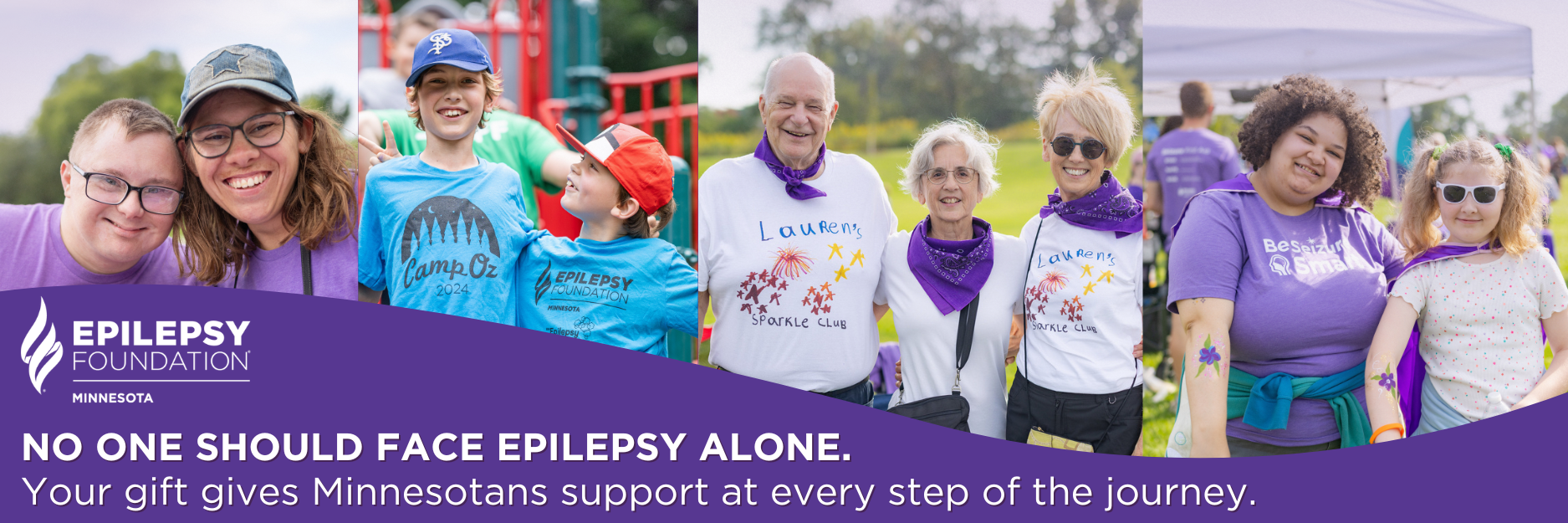
Your gift today creates meaningful connections by bringing together Minnesotans impacted by epilepsy through peer-based support groups, social events, and programs for children, families, and youth.
Will you make a gift today to help ensure no one faces epilepsy alone?
